Battery safety testing equipment supports the evaluation of lithium-ion cells, battery packs, automotive components, electronics, aerospace products, and advanced materials under controlled abuse and environmental conditions. KINTEK’s portfolio includes temperature cycling and humidity chambers, thermal abuse and combustion test systems, overcharge and low-pressure explosion-proof chambers, impact and vibration equipment, nail penetration and compression testers, and remote centralized observation systems. Together, these solutions help laboratories investigate thermal stability, mechanical durability, electrical abuse response, environmental reliability, and no-fire or no-explosion performance with safer, more repeatable test workflows.
تبديل الفئات
الدعم الفوري
اختر طريقتك المفضلة للتواصل مع فريقنا
-
عرض أسعار مجاني املأ النموذج للحصول على الأسعار التفصيلية
-
ارسل بريد الكتروني دعم الاستفسارات التفصيلية
وقت الاستجابة
خلال 8 ساعات في أيام العمل، 24 ساعة في العطل
معدات اختبار سلامة البطاريات
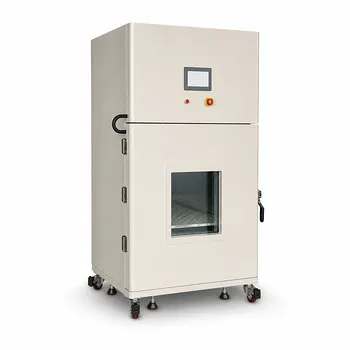
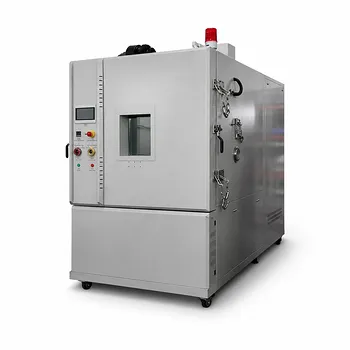
غرفة اختبار التدوير الحراري الكبيرة لاختبارات الموثوقية البيئية
رقم العنصر: DA13
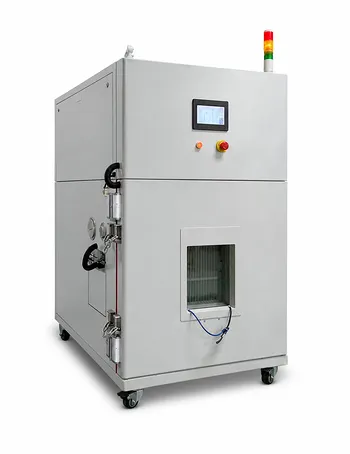
غرفة اختبار قصر الدائرة الكهربائية للبطاريات ذات درجة حرارة محكومة
رقم العنصر: DA15
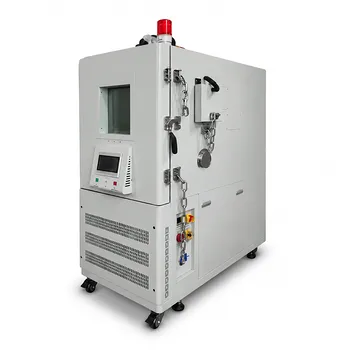
طاولة اهتزاز لنظام اختبار الاهتزاز الكهروديناميكي
رقم العنصر: DA10
جهاز اختبار الصدمات ذو الوزن الثقيل لاختبار سلامة البطاريات
رقم العنصر: DA09
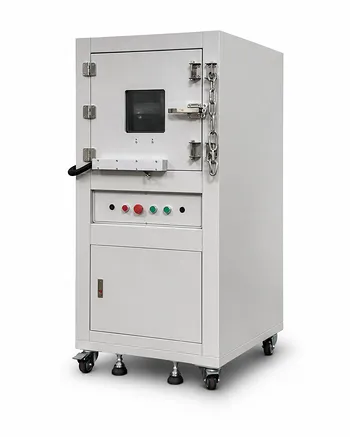
صندوق اختبار مقاوم للانفجار لشحن البطاريات الاستهلاكية الزائد
رقم العنصر: DA01
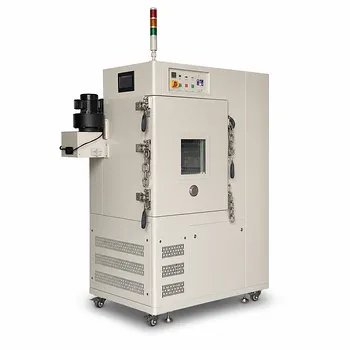
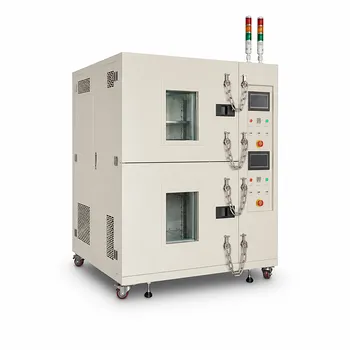
غرفة اختبار درجات الحرارة العالية ذات الحجرتين
رقم العنصر: DA03
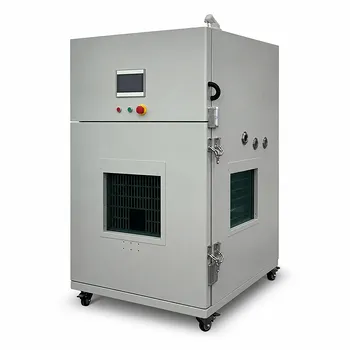
غرفة اختبار الإجهاد الحراري لاختبار سلامة بطاريات الليثيوم
رقم العنصر: DA05
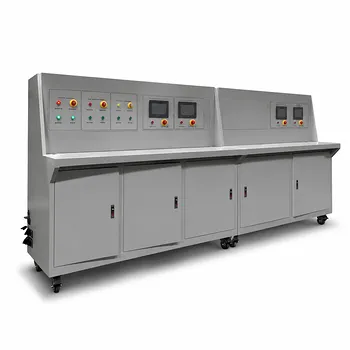
نظام التحكم المركزي عن بعد لمراقبة الاختبارات المعملية
رقم العنصر: DA12
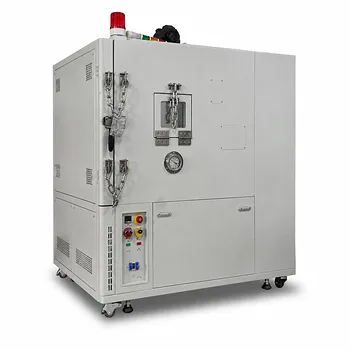
غرفة اختبار درجات الحرارة العالية والمنخفضة المتناوبة والثابتة
رقم العنصر: DA11
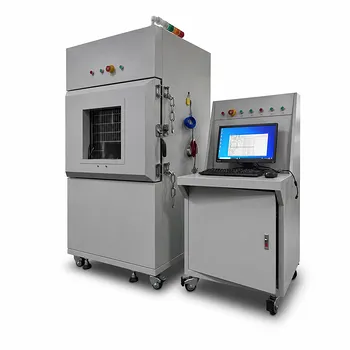
آلة اختبار ضغط واختراق المسمار المؤازرة (سيرفو) المحوسبة
رقم العنصر: DA08
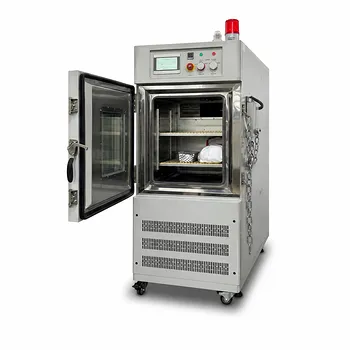
Comprehensive Battery Safety Testing for Reliable Cell and Product Evaluation
Battery safety testing is an essential part of modern cell development, pack engineering, transportation qualification, production quality control, and failure analysis. As energy density increases and batteries are used in electric vehicles, consumer electronics, energy storage systems, aerospace equipment, and industrial applications, laboratories need more than basic charge and discharge equipment. They need controlled systems that can reproduce severe operating conditions, capture the response of a test sample, protect operators, and generate dependable evidence for design decisions and safety assessments.
KINTEK provides a broad range of battery safety testing equipment for research institutions, battery manufacturers, automotive laboratories, electronics companies, universities, and third-party testing organizations. Our solutions cover environmental, thermal, electrical, mechanical, pressure, combustion, and vibration hazards. Equipment can be selected as individual test stations or combined into a wider battery evaluation workflow, helping customers move from early material and cell research to prototype validation, product qualification, and production troubleshooting.
What Battery Safety Testing Equipment Evaluates
Battery safety equipment is designed to expose cells, modules, components, or complete products to carefully controlled stress conditions. The purpose is not simply to cause failure. A well-designed test helps researchers understand the point at which a sample changes behavior, the sequence of events that leads to failure, and whether the failure remains localized or develops into fire, smoke, venting, rupture, thermal runaway, or explosion. This information supports safer product design, improved battery management strategies, more robust packaging, and better process control.
Typical evaluation objectives include:
- Thermal stability: Determine how a battery responds to elevated temperature, rapid heating, prolonged heating, or repeated temperature changes.
- Environmental reliability: Assess performance and safety under high-temperature, low-temperature, humidity, and high-altitude or low-pressure conditions.
- Electrical abuse response: Examine the effects of overcharge and other abnormal electrical conditions in a protected testing environment.
- Mechanical abuse resistance: Evaluate response to impact, compression, nail penetration, drop impact, vibration, and other mechanical stresses.
- Flame and combustion behavior: Observe ignition, flame spread, burning duration, smoke generation, and protective response during controlled combustion tests.
- Failure containment: Verify whether the test system can safely isolate a sample and support observation of smoke, gas release, pressure relief, leakage, or fire.
- Repeatability and documentation: Apply programmable conditions while recording key test parameters and visual changes for later analysis.
These test objectives are relevant to cylindrical, prismatic, and pouch cells, as well as battery modules, packs, electronic assemblies, automotive components, aerospace products, and other materials that may be exposed to energy, heat, impact, or vibration hazards.
Environmental Reliability and Temperature Testing
Temperature has a direct influence on battery electrochemistry, internal resistance, power capability, aging behavior, gas generation, and thermal runaway risk. KINTEK offers several environmental test chamber configurations to help laboratories investigate battery performance and safety across controlled temperature and humidity conditions.
The large temperature cycling test chamber provides an approximately 800 L working volume and a temperature range of about -40°C to +150°C. With controlled thermal transitions and a stated transition rate of up to 5°C per minute, it is suitable for larger cells, battery assemblies, automotive components, electrical products, and qualification programs that require a substantial test space. Its capacity helps laboratories test larger samples or multiple test pieces while maintaining a controlled chamber environment.
The small temperature cycling test chamber is suited to cell-level research, component development, electronics testing, and materials evaluation where a more compact working volume is preferred. It supports controlled high- and low-temperature cycling, including operation from approximately -40°C to +150°C and transition performance designed for repeatable laboratory experiments. A compact chamber can be particularly useful for research groups that need flexible test capacity without dedicating extensive floor space.
The high-low temperature alternating constant temperature chamber and high-low temperature and humidity chamber support programmed environmental profiles for battery cells, automotive components, and electrical or electronic products. These systems can be used to compare sample behavior after repeated temperature exposure, assess sealing and insulation performance, study material aging, and investigate the relationship between humidity, temperature, and electrical reliability. Programmable control makes it possible to define dwell times, ramp sequences, alternating cycles, and repeatable test recipes according to a laboratory’s project requirements.
For applications requiring a larger sample quantity, the two-chamber high-temperature test chamber provides independent chamber control and a working capacity of approximately 216 L. Separate chamber operation can help laboratories organize different test conditions, improve scheduling flexibility, or reduce cross-interference between samples and test profiles. The system also incorporates pressure-relief protection and controlled high-temperature operation for battery performance and safety investigations.
Environmental chambers are valuable because they establish a known thermal history before a battery is subjected to an electrical or mechanical abuse test. For example, a cell may be conditioned at a low temperature before impact testing, held at an elevated temperature before overcharge testing, or cycled through repeated environmental changes before capacity and safety data are compared. This approach allows researchers to study not only whether a battery fails, but how prior environmental exposure changes its failure threshold and response.
Thermal Abuse and Combustion Testing
Thermal abuse testing is used to study how a battery responds when exposed to a controlled external heat source or elevated-temperature condition. This is important for understanding thermal runaway initiation, heat propagation, venting, smoke formation, ignition behavior, and the effectiveness of thermal barriers or pack-level protection strategies.
KINTEK’s thermal abuse test chamber is designed for lithium battery safety evaluation at temperatures up to approximately 150°C. It uses PID temperature control to help maintain a stable test condition and forced airflow to support a more consistent chamber environment. Reinforced construction, smoke exhaust, and protected operation help laboratories conduct demanding experiments while improving operator safety and test repeatability. The chamber can support cell research, production quality programs, thermal management studies, and compliance-focused safety assessments.
The battery combustion test machine is intended for controlled flame-resistance and battery burning tests. It features PLC touch control, remote or automatic ignition, adjustable flame settings, protected observation, and smoke-triggered exhaust. A stainless-steel chamber structure provides a robust enclosure for flame exposure and combustion observation. Researchers can use this type of system to examine ignition response, flame persistence, burning behavior, smoke production, and the effectiveness of battery enclosure or protection materials.
Thermal and combustion testing should always be planned with appropriate sample limits, ventilation, emergency procedures, and facility safety controls. The equipment provides a controlled testing enclosure and protective functions, but the overall test method must also consider sample chemistry, stored energy, gas release, expected failure mode, and local laboratory requirements. KINTEK can help customers review the intended application and select a configuration that is appropriate for the sample size, test severity, observation needs, and installation environment.
Overcharge and Electrical Abuse Testing
Overcharge is a critical abuse condition because excessive charging can increase internal temperature, cause gas generation, damage separators, accelerate side reactions, and potentially trigger venting or thermal runaway. Testing must therefore provide a controlled environment that protects personnel while allowing the laboratory to observe and document the response of the cell.
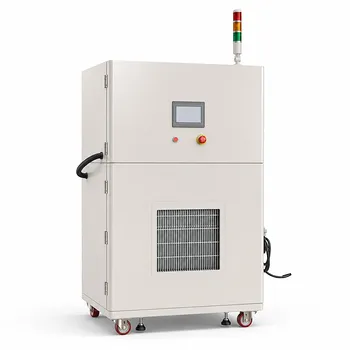
KINTEK’s battery overcharge explosion-proof test box is designed for charge and discharge testing of consumer cells and similar battery samples. Its steel construction, observation windows, ventilation, lighting, mechanical pressure relief, and controlled access help create a safer enclosure for abnormal electrical testing. The test box allows operators to position the sample, carry out the defined electrical procedure, and observe visible changes while reducing direct exposure to heat, flame, smoke, and pressure released during a failure event.
This type of equipment can be used in combination with a battery cycler, power supply, data acquisition system, or other electrical testing platform. The exact electrical test parameters depend on the battery chemistry, nominal voltage, capacity, charging method, and project objectives. When planning an overcharge experiment, laboratories may monitor voltage, current, surface temperature, pressure, visible deformation, venting, smoke, and ignition. The protected test box helps separate the operator from the sample during the most hazardous portion of the procedure.
Low-Pressure and High-Altitude Safety Testing
Changes in ambient pressure can affect gas expansion, venting behavior, enclosure stress, heat transfer, and the response of a battery during abnormal operation. The low-pressure or high-altitude explosion-proof test chamber is designed to evaluate battery safety under low-pressure conditions down to approximately 11.6 kPa, depending on the configured system and test requirements.
The chamber includes PLC touchscreen control, automatic vacuum replenishment, reinforced viewing protection, and a sealed test environment for clear observation. These functions help laboratories establish and maintain a low-pressure profile while monitoring the sample for fire, smoke, leakage, deformation, or other abnormal behavior. High-altitude simulation can be relevant to aviation-related applications, transportation studies, portable electronics, and research into how pressure changes influence battery failure modes.
A low-pressure test is often more useful when combined with temperature conditioning or controlled electrical loading. For example, researchers may compare a battery’s response at normal atmospheric pressure and reduced pressure, or study whether a previously aged or partially charged cell exhibits different venting characteristics. The chamber provides a structured environment for these comparisons while supporting remote observation and protective separation.
Mechanical Abuse: Impact, Compression, and Nail Penetration
Mechanical damage can compromise a battery separator, current collector, casing, electrode structure, or internal electrical insulation. Impact, compression, and nail penetration tests are therefore widely used to investigate battery resistance to accidents, manufacturing damage, transportation events, crash-related deformation, and intentional abuse conditions.
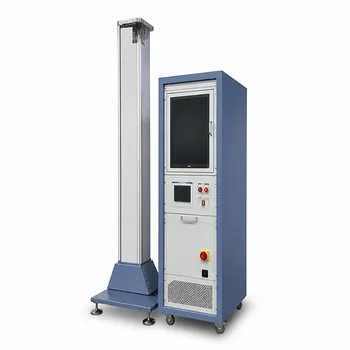
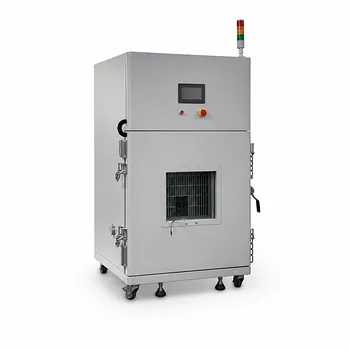
The heavy weight impact test machine evaluates a battery’s resistance to controlled drop impact. It uses PLC control, reinforced protection, adjustable drop height, and precision positioning to help standardize the location and severity of impact. A controlled drop test can be used to observe deformation, casing damage, leakage, smoke, fire, or explosion response. The exact impact energy depends on the mass, drop height, sample geometry, and test procedure, so positioning and repeatability are especially important.
The impact testing machine for electronic, aerospace, battery, and automotive components provides selectable pulse forms, including half sine, post-peak sawtooth, and square wave profiles. With acceleration levels from approximately 20 to 2000 G and a capacity of up to about 10 kg, it can support dynamic shock testing of battery components and other sensitive assemblies. Pulse-shape selection allows engineers to reproduce different shock signatures and compare the effect of short-duration mechanical events on electrical and structural performance.
The computer servo compression and nail penetration test machine combines programmable compression with nail penetration testing for lithium battery abuse research. It provides adjustable force from approximately 1 to 20 kN, programmable displacement, voltage monitoring, safety containment, remote data acquisition, and automated protective response. Compression testing can simulate crushing or deformation, while nail penetration introduces a localized internal short-circuit condition. Monitoring force, displacement, voltage, temperature, and visible sample behavior provides a more complete picture of the failure sequence.
Mechanical abuse systems are particularly valuable when testing new electrode formulations, separator materials, pouch packaging, cell housing designs, module structures, and protective systems. Researchers can compare different designs using consistent loading conditions and identify whether a change improves resistance to localized damage or simply shifts the failure mode. For battery manufacturers, these systems can also support incoming material checks, process verification, engineering validation, and root-cause analysis.
Vibration and Transportation-Related Testing
Batteries and electronic systems can experience vibration during manufacturing, vehicle operation, shipping, aircraft transport, and field use. Repeated vibration may loosen connections, fatigue welds, damage internal layers, weaken seals, or interact with pre-existing defects. A vibration test system helps laboratories evaluate these risks under controlled dynamic conditions.
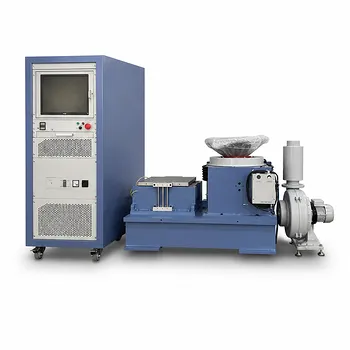
KINTEK’s electrodynamic vibration test system and vibration table provides excitation of approximately 300 kgf, frequency control from about 1 to 4000 Hz, acceleration up to approximately 100 G, and support for sine, random, and shock testing. The system can be configured for component, cell, module, or other product testing according to the required fixture and load conditions. Engineers can apply defined vibration profiles, monitor electrical continuity or functional output, and inspect samples before and after testing for structural or safety-related changes.
Vibration testing is often combined with temperature cycling, charging and discharging, or post-test inspection. This combined approach can reveal failure mechanisms that may not appear during a single isolated test. For example, a battery may remain stable during vibration at room temperature but show a different response after thermal aging or while operating under electrical load. A controlled vibration platform gives laboratories the flexibility to investigate these interactions.
Remote Observation and Centralized Test Management
Some battery safety tests can involve sudden smoke release, intense heat, pressure, flame, or rapid physical deformation. Directly standing beside the test chamber is unnecessary and may increase risk. KINTEK’s remote centralized control system for laboratory test observation supports centralized monitoring through a 2-megapixel viewport camera, an i5 computer, 8 GB memory, 1 TB storage, centralized control-room button controls, and a configured AC 220 V, 3 kW power supply.
A remote observation arrangement can help operators monitor sample-state changes from a separate control room, reduce personnel exposure, and document important moments during a test. Video records may assist with failure analysis, internal reporting, product development, and communication between laboratory teams. Centralized controls can also make it easier to coordinate multiple test systems or establish a consistent operating procedure, depending on the overall laboratory layout.
Remote observation does not replace physical safety reviews, emergency interlocks, ventilation, fire suppression, or appropriate personal protective equipment. Instead, it adds an additional layer of separation and documentation to a carefully designed test workflow. KINTEK can discuss camera placement, viewing requirements, control interfaces, data storage, and integration with your existing equipment.
Protection, Control, and Repeatability
Battery safety equipment must balance test severity with operational control. A useful system should allow the operator to define the test condition, position the sample accurately, monitor key variables, and respond quickly when abnormal behavior occurs. Depending on the equipment type, KINTEK systems may incorporate PLC control, touchscreen interfaces, PID temperature regulation, programmable displacement, pressure relief, forced exhaust, mechanical protection, automatic vacuum replenishment, smoke-triggered ventilation, remote operation, and data acquisition.
These functions contribute to repeatability in several ways. Programmable control helps reduce variation between operators and test runs. Stable temperature regulation makes it easier to compare samples. Adjustable impact height, compression force, flame settings, or vibration profiles allow test severity to be defined more precisely. Reinforced chambers and observation windows help contain hazards while maintaining visibility. Data monitoring supports correlation between the applied condition and the sample response.
The appropriate protection configuration depends on the battery chemistry, stored energy, sample quantity, physical dimensions, expected failure behavior, and required observation method. A small consumer cell may require a different chamber volume and fixture arrangement from a large-format automotive module. Similarly, a thermal abuse test may require different ventilation and pressure-relief considerations from an impact or nail penetration test. KINTEK focuses on matching the system configuration to the real test scenario rather than offering a one-size-fits-all solution.
Applications Across Battery and Materials Research
KINTEK battery safety testing equipment can support a wide range of laboratory and industrial applications, including:
- Lithium-ion and other rechargeable battery cell development
- Pouch, cylindrical, and prismatic cell evaluation
- Battery module and pack engineering
- Electric vehicle and automotive component qualification
- Consumer electronics and portable power products
- Aerospace and high-altitude application research
- Energy storage system safety studies
- Separator, electrolyte, electrode, casing, and thermal-interface material research
- Battery aging and failure analysis
- Incoming inspection and production quality control
- Transportation and environmental reliability studies
- University and academic materials science research
- Comparative evaluation of safety designs and protection systems
Because the same equipment principles are useful beyond battery testing, many systems can also be applied to electronic components, packaging materials, ceramics, advanced composites, powder metallurgy products, and other engineered materials. Impact, vibration, temperature, combustion, and environmental testing can reveal how a material or assembly behaves under real-world stress conditions.
Selecting the Right Battery Safety Test System
The best equipment choice begins with a clear definition of the sample and the hazard being studied. Before selecting a chamber or test machine, laboratories should consider the following factors:
- Sample type and dimensions: Cell format, module size, pack geometry, fixture requirements, and number of samples per test.
- Stored energy and chemistry: Nominal voltage, capacity, state of charge, electrolyte system, and expected failure mode.
- Test condition: Temperature range, humidity, pressure, impact energy, compression force, penetration method, flame exposure, or vibration profile.
- Observation requirements: Direct viewing, camera recording, remote monitoring, gas or smoke observation, and post-test inspection.
- Data requirements: Temperature, voltage, current, force, displacement, acceleration, pressure, time, and video documentation.
- Protection requirements: Enclosure strength, pressure relief, exhaust, emergency stop, interlocks, shielding, and facility integration.
- Workflow and throughput: Research-scale testing, repeated quality checks, qualification programs, or multi-sample production support.
- Installation conditions: Available space, power supply, ventilation, environmental control, access, and connection to existing laboratory systems.
KINTEK’s technical team can help translate these requirements into a practical equipment configuration. We can discuss test objectives, sample dimensions, control range, chamber capacity, fixture design, observation method, and integration requirements before a purchase decision is made.
Customization and Professional Technical Support
Battery safety tests vary significantly between research projects. One customer may need a compact chamber for single-cell thermal abuse experiments, while another may require a large enclosure for battery modules, remote observation, pressure relief, and custom electrical feedthroughs. A standard product provides a strong starting point, but the final configuration should reflect the sample, procedure, facility, and data goals.
KINTEK can support customization in areas such as chamber dimensions, working volume, temperature range, control logic, fixture design, sample positioning, viewing windows, camera systems, remote control, exhaust arrangements, pressure-relief structures, electrical connections, data acquisition, and test-system integration. Customization is evaluated according to technical feasibility, safety requirements, and the intended laboratory workflow.
Our broader experience in battery manufacturing and advanced materials research also helps us understand how safety testing fits into the complete development process. KINTEK supplies equipment for slurry mixing, coating, precision pressing, cell assembly, testing, and related laboratory operations. This broader perspective allows us to consider how a safety test system may connect with cell preparation, conditioning, cycling, characterization, and failure analysis activities.
Build a Safer and More Reliable Testing Workflow
Reliable battery safety data depends on controlled test conditions, appropriate protection, accurate monitoring, and a system that matches the sample and research objective. From temperature cycling and high-temperature exposure to overcharge, low-pressure, combustion, impact, nail penetration, compression, and vibration testing, KINTEK offers equipment to help laboratories investigate battery behavior with greater confidence.
Whether you are developing a new cell chemistry, validating an automotive battery design, studying thermal runaway, evaluating a protective material, or upgrading an academic laboratory, we can help identify a suitable test approach. Share your sample type, test conditions, capacity, required standards or internal procedures, and facility constraints with our team.
Contact KINTEK for a Customized Battery Safety Testing Solution and discuss your application with our specialists. We can recommend suitable equipment, explain configuration options, provide technical specifications, and help plan a safer, more efficient testing workflow for your laboratory.
اطلب اقتباس
سيقوم فريقنا المحترف بالرد عليك في غضون يوم عمل واحد. لا تتردد في الاتصال بنا!